MAVETA - Modernising VET in Agriculture in Armenia (Phase II)
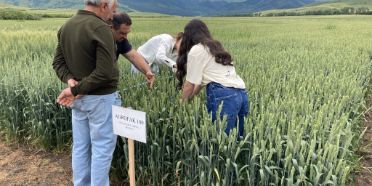
The project aims to improve knowledge and skills of male and female professionals in agricultural and related fields and contribute to higher productivity, increased income, competitiveness and enhanced self-employment with WBL models.
Factsheet
- Schools involved School of Agricultural, Forest and Food Sciences
-
Institute(s)
Knowledge Systems and Knowledge Sharing
Cecchini Institute - Research unit(s) Knowledge Systems and Knowledge Sharing
- Funding organisation Others
- Duration (planned) 01.02.2026 - 31.08.2028
- Head of project Johannes Brunner
-
Project staff
Johannes Brunner
Stefan Dubach
Sven Nägeli -
Partner
Deutsche Gesellschaft für Internationale Zusammenarbeit (GIZ) GmbH
Strategic Development Agency (SDA) NGO - Keywords Curriculum development;Capacity building;Sustainable production systems;Vocational Education and Training
Situation
The MAVETA Phase II aims to explore innovative ways to shift WBL from a niche to the mainstream based on already achieved results of MAVETA Phase I. It is funded by the Swiss Agency for Development and Cooperation (SDC), the German Ministry for Economic Cooperation and Development (BMZ) and the Austrian Development Agency (ADA).
Course of action
HAFL under the lead of GIZ and in close collaboration with SDA will strengthen both governmental, and the local institutions (including private sector, colleges local bodies, etc.) meanly with the following specific activities: (1) Development of guidelines for the implementation of final practical examinations, including capacity building of related bodies and exam experts in order to ensure the quality of the qualification procedures in the practical part. (2) Supporting the collaboration between professional associations and colleges with small Research & Development (R&D) projects and specialized short-term courses which improve productivity with training measures in order to meet the changing needs of the labour market. (3) Further development of teaching competences at the colleges in planning, designing and evaluating of activity-oriented teaching and learning processes with ToT, supervision of further training courses, coaching and support of organizational management of dual VET at the colleges. (4) Further development of company training skills of instructors through specific internships. (5) Support in the improvement of existing A-VET long-term courses, and in the development of new A-VET long and short-term courses, including further development of teaching material and blended learning approaches.