

War-Polluted Soil: Recovery and Remediation
BFH HAFL, together with the Royal Agricultural University (UK), Sumy National Agrarian University and Sky Eye (UA), implements a UK-funded project to assess and remediate war-damaged soils, strengthening Ukraine’s agricultural productivity.
Steckbrief
- Beteiligte Departemente Hochschule für Agrar-, Forst- und Lebensmittelwissenschaften
- Institut(e) Multifunktionale Waldwirtschaft
- Forschungseinheit(en) Waldpolitik und internationales Waldmanagement
- Förderorganisation Andere
- Laufzeit (geplant) 15.06.2025 - 31.03.2026
- Projektleitung Dr. Olena Melnyk
-
Projektmitarbeitende
Dr. Olena Melnyk
Dr. Mariana Melnykovych -
Partner
Royal Agricultural Universtity
Sumy National Agrarian University
Ekomonitoring / SPE SKY EYE LLC - Schlüsselwörter War-polluted soils, environmental impact, soil contamination, agriculture, land degradation, post-conflict recovery, land remediation, agroforestry
Ausgangslage
The ongoing war in Ukraine has severely damaged arable land through bombardments and military pollutants, threatening agricultural productivity, food security, and rural livelihoods. Domestic capacity for systematic soil contamination assessment and sustainable remediation is limited, particularly in remote areas. Data on war-related soil damage remain scarce, and contamination hotspots are largely unidentified. Farmers face immediate risks to crop yields, soil health, and long-term land usability. Strengthening local expertise and establishing robust monitoring systems are essential for evidence-based remediation and restoring agricultural resilience. This challenge demands coordinated international support, practical soil testing, and scalable solutions to safeguard the environment, food production, and vulnerable communities dependent on affected farmland.
Vorgehen
The project introduces a structured approach to assess and remediate contaminated soils in Ukraine. Two laboratories in Sumy and Kharkiv conduct chemical analyses, while soil sampling follows a grid-based method across five frontline regions for consistent coverage. Advanced remote sensing, satellite imagery, and GIS tools help identify contamination hotspots and guide data-driven planning. Forty Ukrainian specialists are trained in soil testing and remediation, with a focus on nature-based solutions such as agroforestry. A conceptual framework links soil health assessments to crop yield impacts. Research outputs—reports, digital maps, and remotely sensed datasets—equip policymakers, farmers, and stakeholders to prioritize remediation. The initiative promotes carbon-friendly techniques tailored to local conditions, combining environmental responsibility with practical agricultural solutions.
Ergebnisse
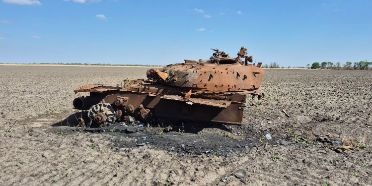
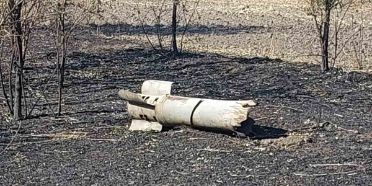
The project delivered measurable results on war-related soil contamination in Ukraine. Two fully equipped laboratories in Sumy and Kharkiv were established for specialized soil analysis. Sampling covered five regions—Sumy, Kharkiv, Kherson, Mykolaiv, and Donetsk—across 30 farms, 19 communities, and three experimental fields. In total, 4,486 hectares were assessed (target: 2,000), and 8,400 samples collected using grid-based and hotspot-focused methods. Analyses revealed explosive craters, weapon debris, pollution from destroyed vehicles, and severe soil disturbance. Laboratory tests showed nutrient depletion and contamination hotspots with arsenic, lead, zinc, and copper exceeding regulatory or background levels. These findings informed targeted remediation recommendations. Remote sensing and satellite data supported monitoring and a digital contamination map. The project trained 18 specialists in sampling, XRF analysis, and assessment, surpassing targets. Overall, it strengthened food-system resilience for over 22,000 people and provided a robust evidence base for policy and remediation planning.
Ausblick
The project lays the groundwork for long-term resilience and sustainable land management in Ukraine. Next steps include refining remediation techniques, expanding soil monitoring beyond the initial five regions, and assessing potential forest contamination. A digital map will track contaminated areas over time. Continuous training of rural soil specialists will strengthen domestic expertise and enable evidence-based interventions in future crises. Data-driven insights will guide policymakers in restoring war-damaged farmland and promoting sustainable agriculture. Lessons learned will inform future programs in conflict-affected and environmentally stressed regions. BFH HAFL will continue working with Ukrainian partners to scale interventions, enhance food security, and foster environmental stewardship, with a strong focus on social inclusion, knowledge transfer, and carbon-friendly remediation approaches.