One-Health Mongolia: Optimizing natural resources, livelihoods and health
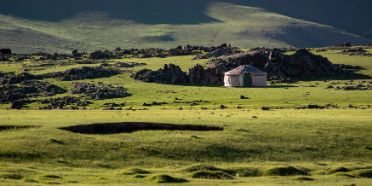
Mongolian grasslands face overuse and a looming “tragedy of the commons.” One-Health Mongolia relates natural resource management, livelihoods and human and animal health by a stringent game-theory analysis.
Steckbrief
- Beteiligte Departemente Hochschule für Agrar-, Forst- und Lebensmittelwissenschaften
- Institut(e) Agronomie
- Forschungseinheit(en) Grasland und Wiederkäuersysteme
- Förderorganisation SNF
- Laufzeit (geplant) 01.11.2025 - 30.08.2028
- Projektleitung Prof. Dr. Beat Reidy
-
Projektmitarbeitende
Prof. Dr. Beat Reidy
Dr. Amy Birkinshaw -
Partner
Swiss Tropical and Public Health Institute
Mongolian University of Life Sciences - Schlüsselwörter Sustainability, grasslands, carbon sequestration, greenhouse gas emissions
Ausgangslage
The One Health in Social-Ecological Systems (OH-SES) approach relates natural resource management, livelihoods and human and animal health by a stringent game-theoretical strategy analysis as an extension of Elinor Ostrom’s book “Governing the Commons”. One Health Mongolia validates the OH-SES concept by applying it to sustainable livestock production, livelihoods and health in Mongolia. It is postulated that limited resources, accessible to all, will inevitably be overexploited and destroyed. Relevant examples include i) overgrazing of common pastures, ii) overfishing of the oceans, and iii) environmental pollution. Although agreeing with the general hypothesis of the tragedy of the commons, Ostrom argues that numerous communities have used their common pooled resources sustainably for centuries in what she has described as a multi-tier Social-Ecological System (SES). Within these structures, resource systems (e.g. pastures and forests) generate resource units (e.g. livestock and timber) that are managed by actors under specific governance systems. These interactions shape outcomes that are influenced by the broader social, economic, ecological and political environment.
Vorgehen
The concept of sustainability is underpinned by four main pillars: human, social, economic and environmental. One Health Mongolia examines the interdependency of these pillars in Mongolia, the country containg the world’s most extensive temperate-grassland. Expanding on Elinor Ostrom’s Social-Ecological Systems (SES) approach, that strategically analyzes the sustainable use of natural resources, One Health Mongolia validates the expanded One Health in Social-Ecological Systems (OH-SES) approach by including humans and animals as resource systems contributing to the gross domestic product. Game Theory is used to mathematically analyse strategic interactions between rational-decision makers, from herders to policy makers, on topics such as communal grazing and livestock vaccination campaigns to find optimal solutions to improve natural resource use, livelihoods and human and animal health. This systems approach links factors such as grassland carbon storage and herders’ incomes showing how decision making shapes key factors and offers a potential policy guide that is adaptable to multiple shared resource scenarios.