

- Story
Research Diaries: The Reward of Thirty Minutes More
24.09.2026 Researcher Diaries offer a glimpse into the research our students do around the world in BFH-HAFL projects and collaborations with international partners.

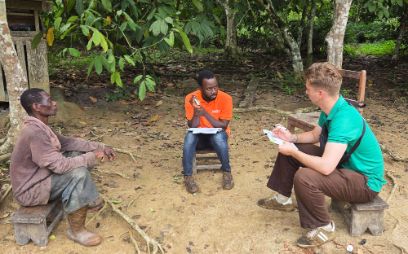
Paul spent several weeks in Akrofuom, Ghana. He interviewed cocoa farmers in the region to collect for data for his Bachelor Thesis, and as part of the Dynamic Agroforestry project led by Koa, a Ghanaian-Swiss cocoa fruit juice company.
The project supports diversified farming and he explored how additional crops contribute to food security and income. On his final morning of interviews, Paul was tired and ready to leave but staying a little longer showed him how much can still be learned in an extra thirty minutes.
Collecting data in the field
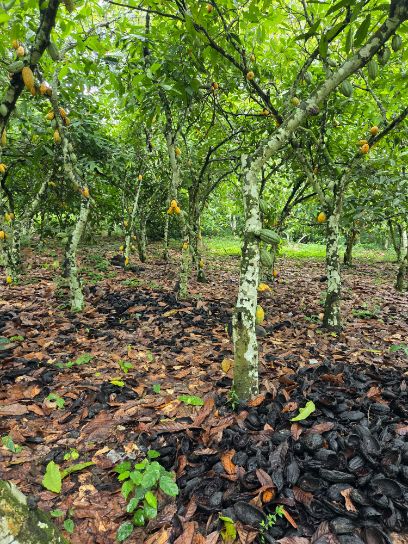
It was my last morning of research fieldwork in Akrofuom, where I had conducted research as part of KOA’s Dynamic Agroforestry project in Ghana. The project supports cocoa farmers in developing more diversified farming systems by combining cocoa with crops such as plantain, cassava and fruit trees. As part of the research, I conducted interviews to understand what it takes to grow these additional crops in terms of labour, inputs and costs, and how they contribute to household food and income.
We started early, as we often did during the week because farmers usually leave for their fields first thing in the morning. Meeting the farmers sometimes meant setting off at five o’clock. Now, after several weeks of data collection, the 50 interviews planned for my bachelor’s thesis were almost finished. I was tired, thirsty and already thinking about the journey back. The plan I had for this last day in Akofuom was simple: interview the remaining five farmers, collect my things from the guesthouse and return to Achiase in the afternoon. Just when I thought the fieldwork was over, we met another farmer.
Finding motivation and a fresh perspective
David, an experienced agronomist who had been supporting my fieldwork, looked at me. Over the weeks, I came to value his advice, but in that moment, he became more of a mentor. He reminded me that sometimes, even when your energy is low, you still have to find some to finish the work.
That was the small push I needed! Thirty minutes did not seem like much anymore.
What struck me during the interview was how clearly the farmer could explain the timing of his decisions. In September, he estimated the inputs he would need for the next production cycle. He bought them during the cocoa harvest, when more money was available. Income from cassava and plantain then helped him cover labour and fuel costs during the rainy season.
He still faced many of the same challenges as the other farmers, especially finding available labour. However, he approached the financial side of his farm differently. Many producers I had interviewed worked with limited cash and without written records, so costs, labour and harvested quantities often had to be recalled from memory. Their decisions depended largely on what was possible at that particular moment.
I knew that this additional interview would not become part of my main dataset, but it would help me look at the other interviews differently.
Fresh Perspectives, Deeper Reflection
When I opened the questionnaire again, I also realised how much the interview process itself had changed since the beginning of the research. None of my research would have been possible alone. In both of my study areas, David and a driver helped organise the visits, reach the communities and speak with the farmers.
During the first interviews, I tried to manage everything: the questionnaire, translation, my notes, time management, and building a clear picture of the farm in my head, including its total area, the different fields and the crops grown in each one. Some of those early conversations lasted more than an hour!
By the final week, David and I had found a rhythm. He often knew which question came next and could continue the conversation while I checked the previous answer. There were fewer pauses, discussion felt more natural and farmers spent less time waiting while we organised ourselves.
Most interviews now lasted less than 40 minutes. I had also begun to recognise crop names, prices and a few recurring expressions in Twi. Nowhere near enough to conduct an interview alone, but it helped me follow the discussion - and my attempts often made people smile.
Now we no longer felt like three people carrying out separate tasks. We worked as a small research team, and I had the feeling that we had all learned something along the way.
Later that afternoon, we collected my bags and started the drive back. When we entered Achiase, it felt like returning to base camp. After a week away in Akrofuom, I was happy to be back in the place that had become my everyday home in Ghana.
While the interviews were complete, the analysis, calculations, and writing were still waiting for me.
But for now, however, the data could wait.
Find out more
Category: International