

Case study of the Southeast Education and Employment Opportunities Project
The project addresses the challenges faced by refugees, internally displaced persons (IDPs), and host communities. It focuses on integrated service delivery (education), protection in development, and economic livelihood development.
Factsheet
- Schools involved School of Agricultural, Forest and Food Sciences
-
Institute(s)
HAFL Institut Hugo P. Cecchini
Agriculture - Research unit(s) International Agriculture and Rural Development
- Funding organisation Others
- Duration (planned) 01.06.2024 - 15.11.2024
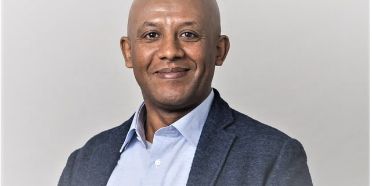
- Head of project Prof. Dr. Zenebe Uraguchi
- Project staff Prof. Dr. Zenebe Uraguchi
- Partner Helvetas Swiss Intercooperation
- Keywords Sustainable production systems;Access to markets and value chains;Society, policy and rural development;Project cycle management and impact assessment;Capacity building;Curriculum development;Innovati
Situation
Between June 2022 and December 2024, HELVETAS Myanmar led the implementation of the Southeast Education and Employment Opportunities (SEEO) project in Myanmar’s Mon and Kayin states under the EU-UNOPS Lives in Dignity (LiD) Grant Facility. The project addressed the complex challenges faced by refugees, internally displaced persons (IDPs), and their host communities. SEEO focused on integrated service delivery (education), protection in development, and economic livelihood development. Despite Myanmar’s political unrest, environmental challenges, and economic instability, SEEO has significantly advanced its core goal: promoting the integration of refugees and IDPs into host communities and supporting them to become productive and self-reliant.
Course of action
At its core, SEEO adopted a facilitative approach, grounded in the principles of Market System Development (MSD), as its guiding approach. This has been an iterative approach to assess and respond to evolving needs. It facilitated vocational training and employment support for 2,000 young adults, supporting them to secure jobs or start businesses. Additionally, 5,000 school-aged children were expected to benefit from basic education initiatives, gaining foundational skills for future growth, with the support of 70 volunteer educators. These volunteers played a crucial role in bridging formal education systems with displaced populations, using traditional and digital learning tools, and offering psychosocial support. However, challenges persisted in reaching older children. SEEO also targeted to engage 20 employers and trainers to shape vocational training programs, creating job opportunities for young people and the unemployed. By collaborating with local organizations like Karuna Mission Solidarity Society (KMSS) and Carelink, the project integrated protection efforts into community structures, strengthening local capacities for long-term sustainability. SEEO's focus on economic livelihood development emphasized skills training, job creation, and entrepreneurship, enabling displaced individuals to transition into meaningful employment or start their own businesses.