


- Press Release
BFH launches a new Master of Science in Resilient Cities and Communities
02.07.2026 Bern University of Applied Sciences BFH is expanding its range of programmes with the new Master of Science in Resilient Cities and Communities. The new degree programme in the field of urban development will begin in autumn 2027. It will equip students with the expertise required to support cities and municipalities in navigating far-reaching transformation processes and initiating sustainable change. The programme brings together expertise from all BFH schools and is developed as part of the PIONEER European University Alliance.
Climate and biodiversity crises, demographic shifts, structural and social transformations present cities and municipalities with complex challenges. To successfully navigate the urban transformation towards a resilient future, there is a need for experts who can bring together different perspectives and develop sustainable solutions. That is exactly where the new master’s programme comes in, equipping future professionals with expertise from all BFH schools.
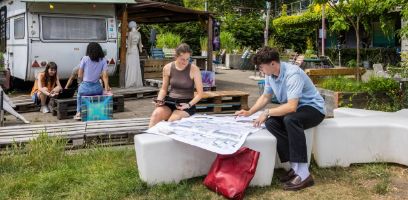
With its new Master of Science in Resilient Cities and Communities, BFH is filling a gap in higher education in Switzerland. The programme aims to develop skills at the intersection of spatial planning, climate, society, economics and governance. It will prepare students to actively shape and drive transformation processes in cities, metropolitan areas and municipalities.
MSc Resilient Cities and Communities
Help shape the cities of tomorrow. As an urban change agent, you help cities and local authorities become more adaptable and resilient in dealing with current crises and far-reaching change. You learn to understand complex urban systems, to identify risks and opportunities at an early stage, and to work with others to develop sustainable solutions. You pursue interdisciplinary and transdisciplinary collaboration with businesses, the public sector and civil society, combining local practice with international perspectives.
An interdisciplinary programme with a strong practical focus
The programme combines ecological, social, economic, spatial and institutional perspectives, equipping graduates with the skills to help shape resilient and liveable cities and communities. Students will learn to analyse urban systems, identify risks and opportunities at an early stage, and develop sustainable solutions in collaboration with businesses, public institutions and civil society. Mirroring their future professional endeavours, the emphasis will be on practical projects and collaboration within interdisciplinary and transdisciplinary teams.

«The Master in Resilient Cities and Communities aims to train professionals to understand complex interrelationships, bring together diverse stakeholders and develop resilient solutions for the transformation of urban spaces.»

The new master’s programme is aligned with the UN’s Sustainable Development Goal 11, which calls for cities and human settlements to be inclusive, safe, resilient and sustainable. Students will benefit from the international network of the PIONEER University Alliance, collaborating with international students and European cities through joint modules, projects and summer schools.
For individuals who want to shape transformation
The master’s programme is designed for graduates from various disciplines who wish to contribute to the development of sustainable cities and communities. In particular, it is aimed at individuals with a background in planning, architecture, engineering, environmental sciences, geography, social work, economics or related disciplines.
The programme will prepare students for specialised and leadership roles at the intersection of urban planning, climate, society and governance. Future graduates will help shape transformation processes at planning and consulting firms, public institutions, NGOs or research institutions. Potential areas of work range from urban and regional development to climate adaptation, mobility and neighbourhood development, as well as real estate and infrastructure projects. Thanks to the project-based curriculum and close collaboration with industry partners, students will gain valuable experience early on and build a broad professional network.