Linux Hardening

Linux has become the platform of choice for enterprise infrastructure, cloud services, A.I. platforms, and IoT/OT embedded systems. Managing security in these Linux environments reduces the risk of cyber attacks.

The Linux Hardening SAS provides participants with skills needed to secure Linux systems using kernel security features, defensive configuration, containers and process isolation, encryption, and minimizing exposed network services.

Start your continuing education on 7 September 2026.

Factsheet

  • Degree/Certificate Short Advanced Studies (SAS) Linux Hardening
  • Duration One week, 5 days
  • Schedule 7.–11.09.2026, 8.30–16.30
  • Application deadline Up to 1 month before the start of the course
  • ECTS credits 3 ECTS-Credits
  • Costs CHF 2'500
  • Teaching language English
  • Location Biel, Aarbergstrasse 46 / Online
  • School School of Engineering and Computer Science
  • Next session September 2026

Structure + Content

Students completing the SAS Linux Hardening will have the skills to securely harden Linux systems.

Short Advanced Studies (SAS)

Short Advanced Studies (SAS) are courses that take 30 to 160 hours (1 to 9 ECTS – can be credited towards DAS or MAS). Participants acquire in-depth, industry-relevant insights and skills on current topics in a short space of time. Students who do not wish to take SAS competency assessments are awarded a course certificate (no ECTS in that case).

Portrait

Linux is increasingly becoming the platform of choice for corporate and non-profit organizations, product manufacturers, service providers, and others. Linux is used for large supercomputers and clusters, cloud and virtualization infrastructure, AI computational processing, and for backend storage and database servers. Linux is also used for high risk Internet facing services, firewalls, and edge computing. In addition to scalable enterprise infrastructure, Linux is also used in small, embedded IoT/OT devices and industrial control systems. Linux end-user distributions are also becoming attractive as desktop environments.

The Linux Hardening SAS provides participants with skills needed to secure Linux systems using kernel security features, defensive configuration, containers and process isolation, encryption, and minimizing exposed network services.

Career opportunities

The SAS Linux Hardening program will prepare students for career opportunities in a variety of organizations:

  • Finance industry – Linux based payment systems and banking platforms
  • Large enterprises using Linux – IT/Cyber security and CTI teams
  • Product manufacturers and developers using Linux
  • Firms with Linux based industrial control systems
  • Consultancy firms with a focus on cyber security, needing Linux security experts
  • Private boutique (specialized) security firms focused on Linux
  • Companies with Linux based big data and artificial intelligence systems

Education goals

This continuing education program has practical learning objectives. Students completing the SAS Linux Hardening will have the skills to securely harden Linux systems.

Topics and Content
 

  • Security models: DAC, MAC, users/groups
  • Linux security features: SELinux, Apparmor
  • Stripping down: systemd, network listeners, daemons, d-bus activation
  • Defensive kernel settings and networking configuration, firewalling
  • Secure remote access, login process, privilege escalation
  • File system permissions, ACLs
  • Containers and process isolation
  • Encrypted files systems, use of TPM
  • Secure disposal of decommissioned Linux systems

This module teaches students how to harden Linux systems to protect against cyber-attacks using defensive configuration and secure system setup.

To receive 3 ECTS (European Credit Transfer and Accumulation System) academic credits, students must demonstrate their knowledge by successfully completing assignments, projects, and final exam as required by the lecturer.

The weighted average (0–100%) of the success rate of the proof of proficiency is converted into a grade between 3 and 6. A grade of 3 (average success rate of less than 50%) is unsatisfactory. Grades 4, 4.5, 5, 5.5 and 6 (average success rate between 50% and 100%) are sufficient.

The assessment criteria for determining the success rate will be communicated at the beginning of the SAS.

Students who attend all classes but do not complete the assessment work will receive a certificate of attendance equivalent to 40 CPE (Continuing Professional Education) hours.

Degree + Title

Short Advanced Studies (SAS) in Linux Hardening

Requirements + admission

Find out which professionals this course is designed for and what requirements you need to meet.

Requirements

Admission into the SAS Linux Hardening requires one of the following:

  • A university degree or equivalent professional education degree in computer science, computer engineering, cyber security, or related field
  • Professional experience in cyber security, threat intelligence, digital forensics or IT investigation, and a related industry certification

If applicant qualifications are unclear or inconclusive, further information (for example a CV) or an interview may be requested.

Target audience

The SAS Linux Hardening is designed for IT and Cybersecurity professionals wanting to specialize in Linux systems and Linux Cyber security.

Infoevent + Course guidance

Do you have questions about continuing education? We will be happy to answer your questions.

Course guidance

Choosing a basic or continuing education programme is an important decision when planning your professional career. We will be happy to answer your questions and clarify your personal requirements for the desired continuing education during an individual consultation.

Location + Infrastructure

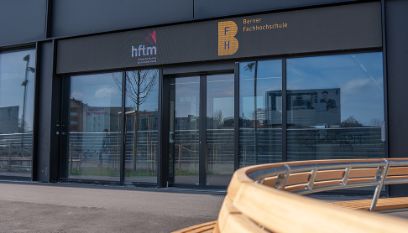
This course is held on site at Aarbergstrasse 46 in Biel/Bienne.
Some modules allow remote attendance; however, onsite attendance is strongly recommended (better teaching experience, building friendships with your student colleagues and teachers).

Switzerland Innovation Park Biel/Bienne (SIPBB)

A location with many advantages

  • Classrooms within two minutes walking distance from Biel/Bienne railway station
  • Ideal train connections from Bern’s main railway station (every 15 minutes) and from Bern Wankdorf (every 30 minutes)
  • State-of-the-art infrastructure in the new SIPBB building
  • Various catering options in the immediate vicinity
  • Innovation and networking events

And that’s not all! Biel/Bienne is…

  • an innovation hotspot,
  • a university city,
  • an industrial and service city with numerous major players in the watchmaking, mechanical engineering, precision engineering and medical technology industries and major representatives of the communications and telecommunications sectors,
  • bordered by Lake Biel and its wide range of sports and leisure facilities,
  • a city that embodies bilingualism,
  • a town with a vibrant cultural life.

Biel Aarbergstrasse 46 (Switzerland Innovation Park Biel/Bienne)

Biel, Aarbergstrasse 46

Bern University of Applied Sciences

Engineering and Computer Science
Switzerland Innovation Park Biel/Bienne
Aarbergstrasse 46
CH 2503 Biel

Bern University of Applied Sciences

Engineering and Computer Science
Switzerland Innovation Park Biel/Bienne
Aarbergstrasse 46
CH 2503 Biel