Objectives of the Chair
A UNESCO Chair is an international network of higher education institutions that partner with UNESCO to advance scientific findings and practical skills in areas of global importance.




The UNESCO Chair for Higher Education, Research, and Innovation in Responsible Global Management (the UNESCO Chair in Responsible Global Management for short) promotes education with the aim of jointly shaping a more sustainable future through responsible global management.

A UNESCO Chair is an international network of higher education institutions that partner with UNESCO to advance scientific findings and practical skills in areas of global importance.
Promoting new scientific knowledge on the topic of responsible global management
Developing innovative models, methods and tools for management practices in the economic, political and social spheres (local, regional, national, international).
Revisiting together programs and contents of higher education for the responsible management in order to develop up-to-date and future-oriented learning offers.
A global society that shapes a sustainable future through responsible management.
Promote new scientific knowledge, responsible global management and future-oriented collaboration methods.
We are an interdisciplinary, intercultural, and international team committed to a more responsible approach to the tangible and intangible aspects of cohabitation and collaboration at local, regional, national and international level. Our values are: dialogue, inclusion, respect, critical thinking, and creativity - for the benefit of people and the planet.
We offer:
Cecchini Institute for International
Cooperation and Development
Länggasse 85
CH- 3052 Zollikofen
For the edited volume “Theories and Practices of Responsible Global Management”, we invite contributions from academia and practice on topics such as leadership, sustainability, social justice, interculturality, artificial intelligence, and new forms of collaboration.
Interested? We look forward to receiving your submission and would appreciate it if you shared this call within your network.
Presentation of the outcomes of the international symposium “Social Marketing and Entrepreneurship for Behavioral Change in Waste Management in Africa”. Organized in collaboration with the University of Yaoundé II and Social Intellect Patrol (SIP).
International Symposium of the Cecchini Institute.
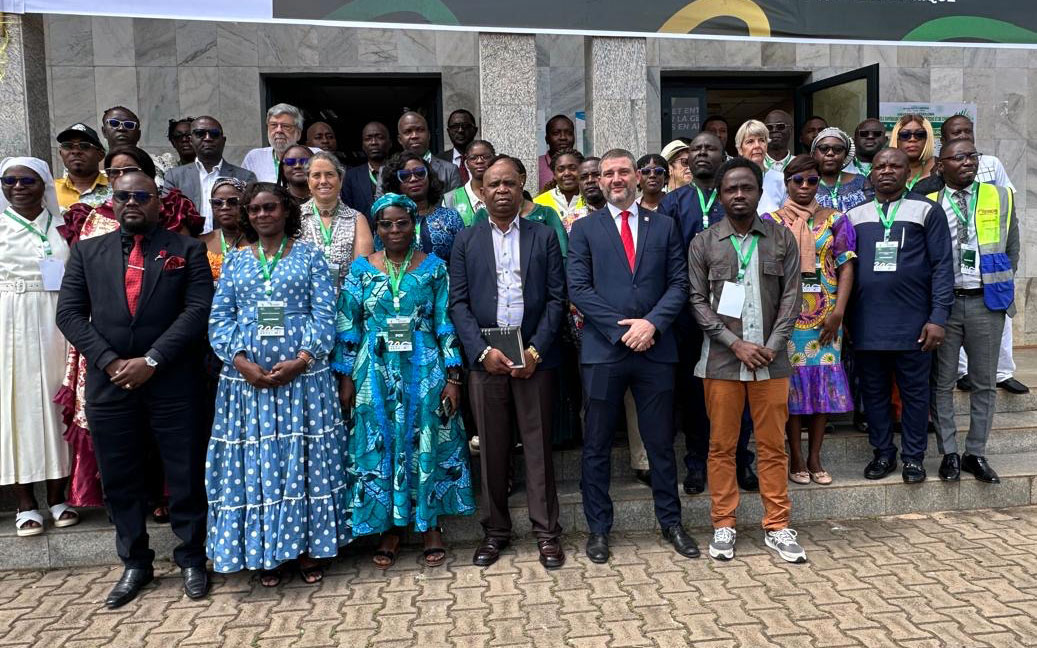
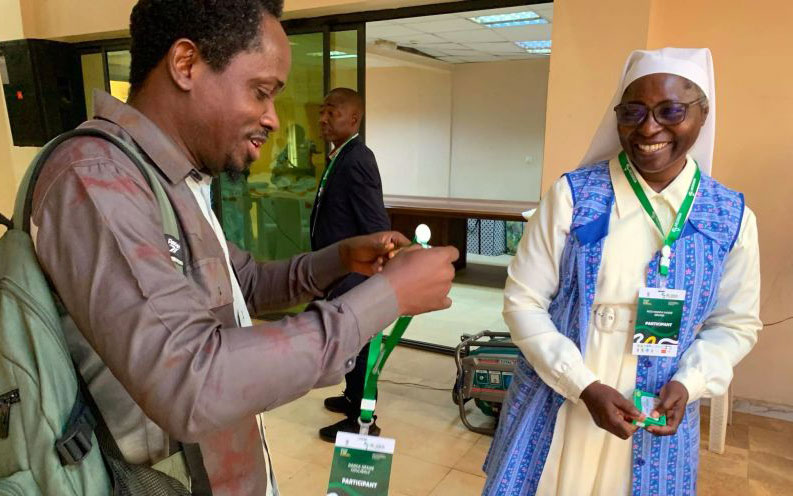
3rd International Conference of the UNESCO Chair in Responsible Global Management, organized in collaboration with the Université Polytechnique de San Pedro, the Université Félix Houphouët-Boigny, and the UNESCO Chair for a Culture of Peace, Côte d’Ivoire.
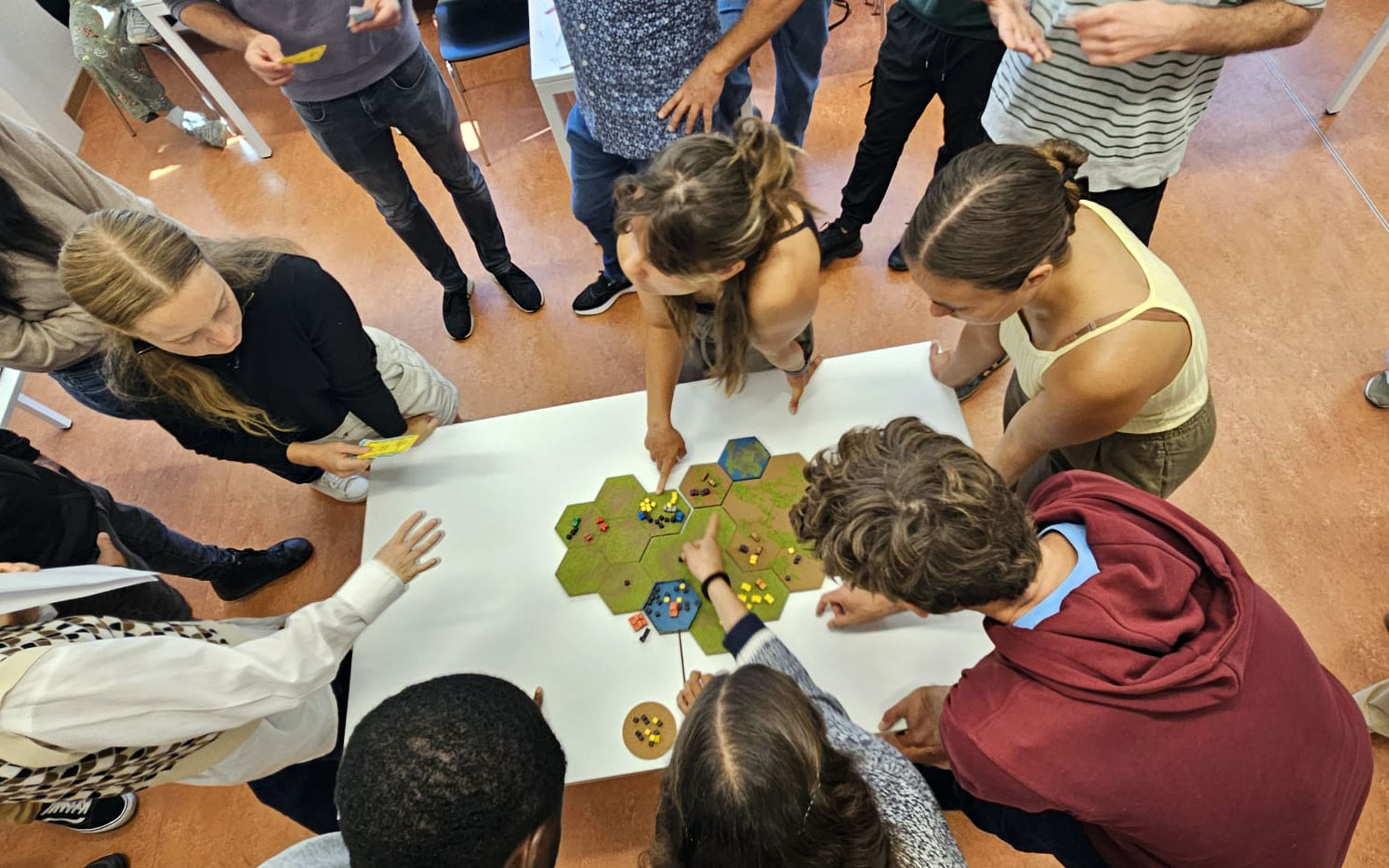
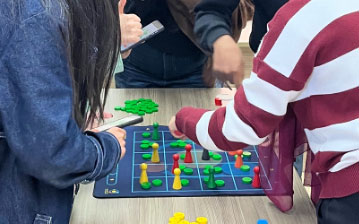
As part of the Master’s course “Natural Resources Management and Climate Change” led by Prof. Dr. Claude Garcia (BFH-HAFL, Forest Governance), teams of international students conducted case studies on waste management in Africa and developed prototypes of strategy games designed to promote behavioural change in this field.
Together with the Initiative Afrique (University of Bern), we presented our exploratory study “Swiss Academic Education, Research and Innovation Partnerships with Africa – Exploratory Landscape Analysis”. The presentation took place during the conference “Science Diplomacy in Practice: Contributions of Swiss Higher Education, Research and Innovation in Africa”, organised by the Federal Department of Foreign Affairs (FDFA), the Swiss Leading House for Africa, and Initiative Afrique.
Social Marketing and Entrepreneurship for Behavioral Change in Waste Management in Africa.
.
Immersive “Planet C – Play Again?” workshops with Master's students at Université Ibnou Zohr (UIZ), Faculty of Legal, Economic and Social Sciences (FSJES).
2nd International Conference of the UNESCO Chair – Responsible Global Management for Sustainable Peace and Development.
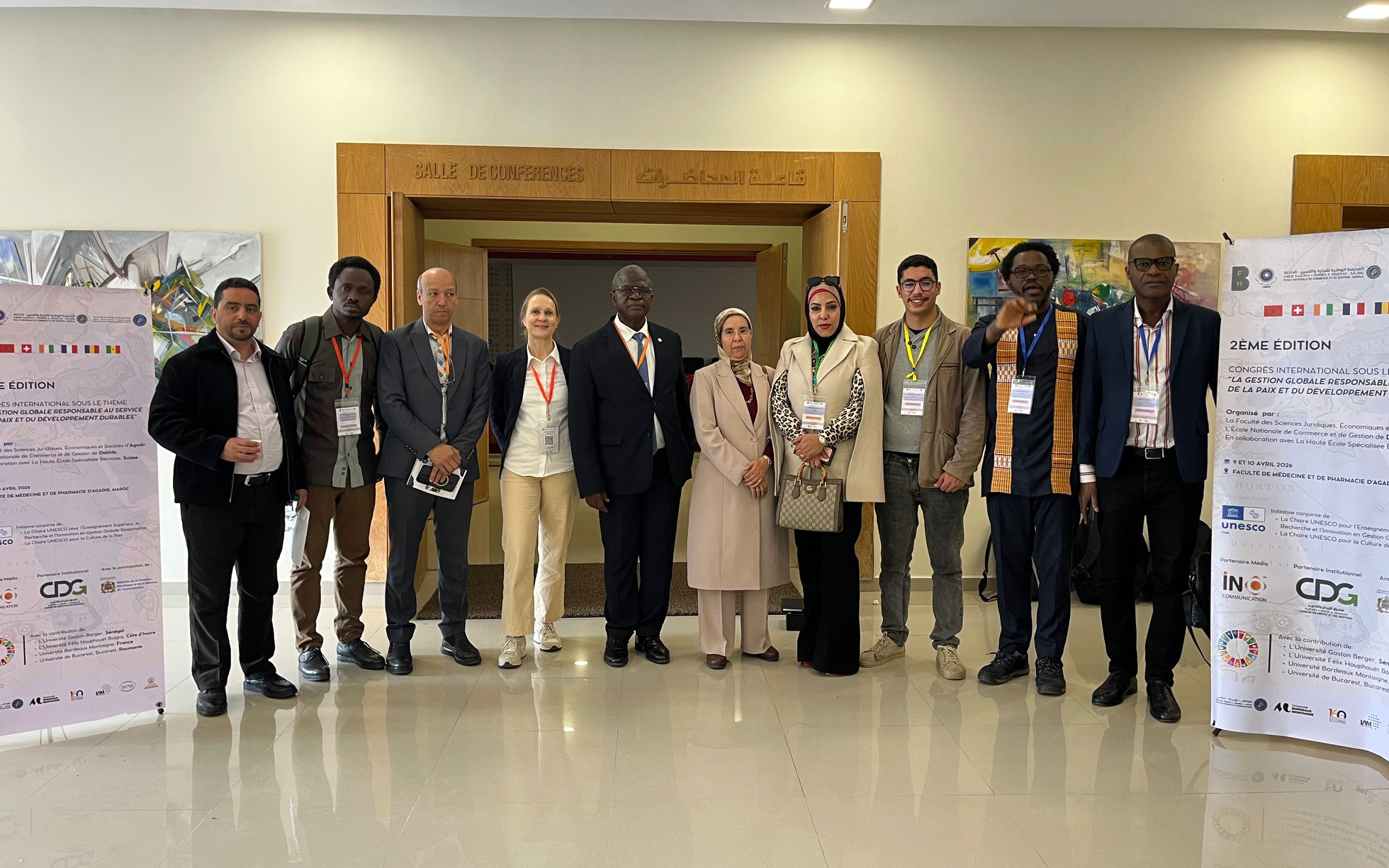
The BFH team contributed to the event with an interactive session entitled “Responsible Global Management: From Theory to Practice”.
SIETAR Conference 2025: “Intercultural Leadership”
1st International Conference of the UNESCO Chair in Responsible Global Management and Kick-off Event: “Responsible Management in the Digital Age and in the Face of Global Challenges: Crises of Leaders or Leaders of Crises?”
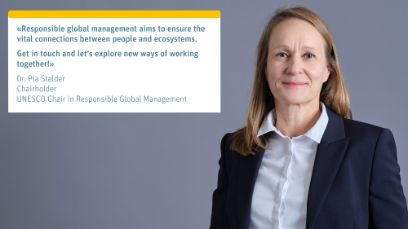
The UNESCO Chair at Bern University of Applied Sciences operates across departments. It is based at the BFH-HAFL Cecchini Institute and operates on an interdepartmental basis. It is led by Pia Stalder in close cooperation with Professor Malika Abentak and Professor Kalidou Seydou Sy.
The Chair currently consists of a partnership of 19 higher education and research institutions, seven in Europe (Switzerland, France, Romania, Denmark), nine in Africa (Morocco, Senegal, Ivory Coast, Kenya), and three in Canada.

Chairholder
E-Mail
Pia Stalder is a Project Manager at Bern University of Applied Sciences (Cecchini Institute, BFH-HAFL). Through her work in research, education, and consulting, she aims to strengthen interdisciplinary, intercultural, and international communication skills. These skills are the key to respectful, peaceful and hence successful collaboration across physical and mental boundaries.
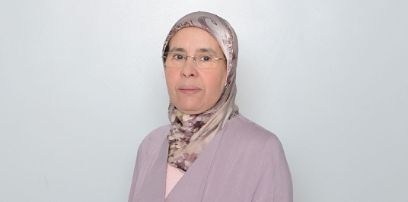
Co-Coordinator Morocco
E-Mail
Malika Abentak has a doctorate in information and communication sciences. She is based in the Faculty of Legal, Economic and Social Sciences in Agadir. She teaches written communication, personality development and soft skills. Her academic research focuses on the use of mobile technologies, particularly podcasts. She has supervised several dissertations and published a number of papers on the use of digital technologies in different fields.

Co-Coordinator Senegal
E-Mail
Kalidou Seydou Sy qualified as a research supervisor in language sciences (semiotics) at the University of Limoges and has a doctorate in comparative literature from the University of Cheikh Anta DIOP in Dakar.
His research and publications focus primarily on the creation of meaning in complex environments in order to establish a situated theory of meaning (not to say an African theory of meaning). He is director of the Groupe de recherches en Analyse des Discours Sociaux (GRADIS) and publisher of the KONNGOL-Gradis journal for discourse analysis. Kalidou Sy works for several national and international bodies on questions of social innovation and anthroposemiotic mediation. He is a professor at Université Gaston Berger in Saint-Louis, Senegal.
The UNESCO Chair for Higher Education, Research, and Innovation in Responsible Global Management is consistent with the Agenda 2030 (UN), the Agenda 2063 (AU), the Swiss foreign policy «Africa Strategy» and with the strategic thematic fields of BFH.
The activities and projects of the new Chair will contribute in particular to the following UNESCO initiatives:
Funded by Innosuisse (Swiss Innovation Agency), this project supports a collaboration between LEAF and BFH’s UNESCO Chair in Responsible Global Management (RGM). The BFH team contributes to enhancing the serious game Planet C – Play Again? by analyzing communicative behavior in adaptive co-management processes.
→ Learn more about the game: Planet C – Play Again?