



- Story
Time in bark and gaps in the canopy
04.08.2026 A handful of inconspicuous Douglas-fir trees in Ukraine are opening a window into the past and providing valuable insights for the forest management of the future.

A small stand of Douglas fir trees rise above the surrounding forest in a quiet corner of western Ukraine. Their straight trunks climb high into the canopy, their thick bark furrowed by time. To an untrained eye, they are tall trees among many others. But to Prof. Dr. Christian Rosset they tell a story that stretches back more than a century.
An imported forest
These Douglas firs were planted here sometime at the end of the nineteenth century, when, European foresters were experimenting with new species. Seeds of Douglas fir had travelled across the Atlantic from North America, sometimes via Germany, and were raised in nurseries before being planted in carefully planned stands.
The American species promised something attractive: fast growth with tall, dense and straight trunks grow valuable timber. Several hundred trees were planted here on a plot of roughly 1.8 hectares and only a fraction of them “won” the race for space and light. No one at the time could know that they would witness changes in empires, war and forest management practices.
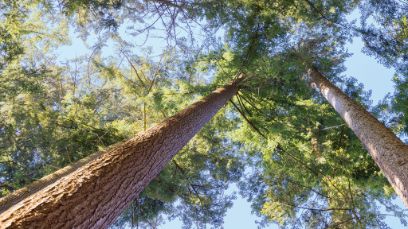
More than 120 years later, the stand is a living archive of forest management. “Forests record time,” Dr Rosset explains. “If you know what to look for, you can see both the past and the future.”
Walking through the trees, Dr Rosset can read tiny details that many people would never notice. A small gap in the canopy may reveal where trees were harvested decades ago following a different forest management philosophy. Differences in tree height, species and spacing hint at decisions made long ago by the foresters who shaped this place. Younger trees growing in newly created pools of light beneath the giants show how the forest can renew itself.
Dr Rosset has been working with Ukrainian foresters since 2022 to share his skills in close-to-nature forest management. In Switzerland, forests are often managed by carefully selecting individual trees for harvesting. Clear-cutting is forbidden by law. More light encourages the forest to grow oak, while beech prefers more shade. One of the tools used for training is the marteloscope — a forest plot where foresters practice tree marking and learn how their decisions influence the (medium and) long-term development of a stand.
Managing for what comes next
These lessons are becoming increasingly important. Ukraine’s forests, like in Switzerland, are already experiencing longer dry periods and rising temperatures due to climate change. Some species, such as spruce and beech, are less resilient and show signs of stress. In lower areas dominated by pine, forest fires are becoming more frequent — sometimes triggered not only by drought but also by the realities of war. In this uncertain future, foresters are searching for ways to make forests more resilient. Species like oak or Douglas fir may play a role, but diversity remains key.
When these Douglas firs were planted, forestry was experimenting with new ideas. Today, the same trees help teach another generation how to guide forests through the challenges ahead. Time moves slowly in the forest. But every decision — where to plant, which tree to cut, which to leave — shapes what the forest will become decades from now. These trees, planted more than a century ago, are a reminder that the forests of the future are already growing around us.
Find out more
Category: International