
Modern Battery Systems

In three days, you will gain an overview of current battery technologies with a focus on lithium-ion batteries. The current status, future prospects, and safety aspects will be examined in depth. You will learn how to evaluate systems from a technical and economic perspective and make informed decisions for your projects and business models.

Start your continuing education on 16 October 2026.

Factsheet

  • Degree/Certificate Short Advanced Studies (SAS) Modern Battery Systems
  • Duration 3 days
  • Schedule Autunm: 16./ 23./30.10.2026
  • Application deadline Up to 1 month before the course begins
  • ECTS credits 2 ECTS
  • Costs CHF 1’800
  • Teaching language English
  • Location Biel, Aarbergstrasse 46
  • School School of Engineering and Computer Science
  • Next session Oktober 2026

Structure + Content

Modern battery systems are experiencing rapid progress in terms of power density, cost efficiency, and market growth.

Short Advanced Studies (SAS)

Short Advanced Studies (SAS) are courses that take 30 to 160 hours (1 to 9 ECTS – can be credited towards DAS or MAS). Participants acquire in-depth, industry-relevant insights and skills on current topics in a short space of time. Students who do not wish to take SAS competency assessments are awarded a course certificate (no ECTS in that case).

Portrait

The rapid progress in battery technology is a key enabler of the transition away from fossil fuels. At the same time, improvements in energy density, power capability, and cost efficiency are opening entirely new fields of application for energy storage systems. In such a dynamic environment, it is challenging for companies to keep pace with technological developments and remain informed about the latest advances. As a result, there is a risk that new business ideas or projects are based on outdated knowledge about battery technologies. This course addresses this gap in a targeted and time-efficient manner. Participants will gain an overview of the current state of the art in battery systems, as well as insights into expected future developments, enabling them to make practical and well-informed decisions for implementation.

Career opportunities

With the SAS Modern Battery Systems, participants deepen their knowledge of battery technologies and gain a solid understanding of the current technological landscape. Participants acquire the skills required to assess and select appropriate battery technologies for specific applications, evaluate their technical and economic implications and optimize their use within their organization.

Education Goals

Participants will:

  • understand the fundamentals, areas of application, and limitations of various battery technologies
  • identify and evaluate opportunities arising from the use of modern batteries of various types
  • be familiar with the causes of battery aging and strategies for preventing it
  • be aware of safety requirements when using batteries
  • recognize potential applications for modern batteries in their business/administrative environment
  • understand the sustainability dimension

  • Fundamentals
  • Technical Deep Dive into Li-ion and Demonstration
  • Market, Applications and Sustainability

Fundamentals

  • Electrochemical energy storage and working principle of Li-ion batteries
  • Cell chemistry (NMC, LFP, LTO, Na-ion), cell format types
  • Manufacturing of lithium-ion batteries
  • Battery properties and performance 
  • System architecture

Technical Deep Dive into Li-ion and Demonstration

  • Technical Deep Dive into Li-ion and Demonstration
  • Safety aspects
  • Estimation of Battery state functions
  • Lifetime and aging mechanisms
    • Cycling aging and calendar aging
    • Capacity loss (State of Health – SoH)
    • Increase of internal resistance (State of Resistance – SoR)
  • Laboratory demonstration with cells and modules

Market, Applications and Sustainability

  • Market overview
    • Growth forecasts
    • Raw materials and supply chains
    • Regulations and battery legislation 
    • Next Battery generations
  • From cell to module to application
    • Cost analysis and battery pack sensitivity
    • Manufacturers in the EU and Switzerland (cells and systems: Leclanché, Dencell, etc.)
    • Evaluation of application opportunities
  • System sizing: which battery for which application
    • Grid-supportive operation (PRL, SRL, arbitrage)
    • Peak shaving, self-consumption, backup power and energy autonomy
    • Vehicle to X
  • Circular economy and recycling
    • Second life
    • Recycling
    • CircuBat Project

Within two weeks of completing the course, participants must submit a case study demonstrating how they have applied what they have learned in their professional or private life (1-3 A4 pages). This case study will be used to assess whether the course has been passed or failed.

Students who do not wish to provide proof of competence will receive a course certificate.

Degree + Title

Short Advanced Studies (SAS) «Modern Battery Sytems»

Requirements + admission

Find out which professionals this course is designed for and what requirements you need to meet.

Entrance requirements

Existing experience in evaluating battery technologies for new applications and/or a specific issue in the professional environment are helpful but not mandatory prerequisites.

Target audience

This program is suitable to all individuals from companies or public authorities who need to explore the possibilities offered by modern battery systems:

  • R&D Engineers, Production Engineers

  • Project Manager

  • Research staff in public or private sector

  • Energy consulting staff

  • Business Development Manager

  • Product Manager

  • Managing Directors

Course guidance

Do you have questions about continuing education? We will be happy to answer your questions.

Course guidance

Choosing a basic or continuing education programme is an important decision when planning your professional career. We will be happy to answer your questions and clarify your personal requirements for the desired continuing education during an individual consultation.

Location + Infrastructure

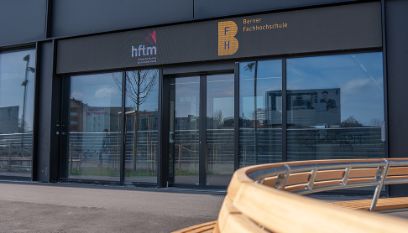
This continuing education course takes place at Aarbergstrasse 46 in Biel.

Switzerland Innovation Park Biel/Bienne (SIPBB)

A location with many advantages

  • Classrooms within two minutes walking distance from Biel/Bienne railway station
  • Ideal train connections from Bern’s main railway station (every 15 minutes) and from Bern Wankdorf (every 30 minutes)
  • State-of-the-art infrastructure in the new SIPBB building
  • Various catering options in the immediate vicinity
  • Innovation and networking events

And that’s not all! Biel/Bienne is…

  • an innovation hotspot,
  • a university city,
  • an industrial and service city with numerous major players in the watchmaking, mechanical engineering, precision engineering and medical technology industries and major representatives of the communications and telecommunications sectors,
  • bordered by Lake Biel and its wide range of sports and leisure facilities,
  • a city that embodies bilingualism,
  • a town with a vibrant cultural life.

Biel Aarbergstrasse 46 (Switzerland Innovation Park Biel/Bienne)

Biel, Aarbergstrasse 46

Bern University of Applied Sciences

Engineering and Computer Science
Switzerland Innovation Park Biel/Bienne
Aarbergstrasse 46
CH 2503 Biel

Bern University of Applied Sciences

Engineering and Computer Science
Switzerland Innovation Park Biel/Bienne
Aarbergstrasse 46
CH 2503 Biel