Digital Forensics & Cyber Investigation

The digital transformation of society is creating new challenges and new opportunities, both for criminals and for criminal investigators. Today forensic and cyber investigators must collect and analyze digital evidence from a diverse landscape of technically complex sources. Our unique Master program gives you a wide range of practical skills needed for an exciting career in digital forensics and cyber investigation.

What makes this program unique?

  • Expanded digital forensics coverage of topics including storage, memory, operating systems, applications, malware analysis, networks, cloud, social media, encryption,
  • Hardware forensics coverage of topics including mobile devices, IoT, automobiles, drones, industrial control systems, medical devices, chip-off and JTAG,
  • Emphasis on cyber investigations covering cybercrime reconstruction, attribution, intelligence, botnets, cyberfraud, digital payments and virtual currencies, data theft, data analytics
  • The taught modules are designed in one-week blocks to facilitate remote and employed students,
  • The MAS is taught in English by internationally recognized experts in the field.
     

Factsheet

  • Degree/Certificate Master of Advanced Studies (MAS) in Digital Forensics & Cyber Investigation
  • Duration 5 semesters
  • Application deadline 24 March
    23 September
  • ECTS credits 60 ECTS-Credits
  • Costs from CHF 34,000
  • Teaching language English
  • Location Biel, Aarbergstrasse 46 / Online
  • School School of Engineering and Computer Science
  • Next session Spring semester 2026

Content + Structure

Our Master program gives you a wide range of practical skills needed for an exciting career in digital forensics and cyber investigation.

Portrait

The digital transformation of society is affecting crime, criminals and criminal investigation. New cyber crime methods using advanced technical tools and exploitation are an opportunity for criminals and a challenge for investigators.

Technically complex illegal activities are being sold as services to less skilled criminals (Crime-as-a-Service), increasing the challenge of fighting cybercrime. On the other hand, criminals face challenges trying to hide and avoid attribution. The large amount of digital traces stored across multiple locations creates an opportunity for criminal investigators.

Learning Objectives

Graduates will understand the fundamental concepts of modern digital forensics and cyber investigations. They will have the skills to collect and analyze digital evidence from a variety of sources, and have the ability to investigate complex cyber incidents.

Carrer Opportunities

The Master of Advanced Studies in Digital Forensics & Cyber Investigation prepares students for jobs in law enforcement, military, government CERTs, cyber-fraud investigation teams in the finance industry, cyber claims investigators in the insurance industry, security and incident response teams in large firms, consulting and security service providers, and specialized digital forensic and investigation firms.

The Master of Advanced Studies in Digital Forensics & Cyber Investigation is designed for remote and international students pursuing a master’s Degree part-time. The program has 4 taught semesters (4 CAS modules) and a final master’s thesis semester.

Each semester (CAS) has four modules taught in English by experienced industry professionals. The modules are one full week of theory and practice with lab work, giving students a «hands-on» learning experience. Classes are taught in a combination of online and onsite formats in Biel/Bienne.

The Master of Advanced Studies (MAS) degree is 60 ECTS, and a 12 ECTS Certificate of Advanced Studies (CAS) is awarded after each semester.

Required modules

  • Digital Forensic Fundamentals – standards, processes, cyber laws
  • Cybercrime Overview – crimes, criminals, and victims
  • Cyber Investigation Fundamentals – basic investigations and intelligence
  • Digital Forensic Acquisition – forensic imaging of storage media
  • CAS DFCI Advanced / Semester 2 / 12 ECTS)
    • File System Forensics – storage and filesystem analysis
    • Operating System Forensics – Windows, Mac, Linux artifacts
    • Memory Forensics – aquisition and analysis
    • Application and Media Forensics – artifacts and file metadata

Module Options for Semester 3+4 (24 ECTS)

Note: Pool/portfolio Modules are run subject to student demand, and may be postponed if demand is too low.

Master's Thesis

The research and write-up of the Thesis requires one full semester of work. This includes:

  • choosing a thesis topic
  • writing a thesis proposal
  • finding a Thesis expert (advisor)
  • conducting the research project work
  • writing up the dissertation
  • the Thesis defense

The master’s thesis is typically started after completion of the first four taught semesters (48 ECTS or 16 modules total). The expected workload for completing the master thesis is a minimum of 360 hours. Depending on the external examiner/expert, the dissertation and thesis defense may be written in German or French. During the final thesis semester, students may also attend elective modules that were unavailable during semesters 3 and 4.

  • Direct instruction
  • Inquire-based learning
  • Research project work
  • Master’s thesis

Title + Degree

Master of Advanced Studies (MAS) in «Digital Forensics & Cyber Investigation»

Requirements + Admission

Find out which professionals this continuing education program is designed for and what requirements you need to bring with you.

Requirements

Admission into the The Master of Advanced Studies in Digital Forensics & Cyber Investigation requires at least one of the following qualifications:

  • a bachelor’s degree or equivalent professional education degree in computer science, computer engineering, or related field
  • professional experience in digital forensics or IT investigation together with a related industry certification
  • If applicant qualifications are unclear or inconclusive, further information or an interview may be requested.

Target audience

The Master of Advanced Studies in Digital Forensics & Cyber Investigation (MAS DFCI) is designed for two groups of professionals:

  • Experienced forensic investigators who want to increase their technical skills in digital forensics and cyber investigations
  • Experienced engineers and technicians who want to transition into the field of digital forensics and cyber investigations.

As a rule, a university degree and practical experience are required for admission. 
People with a high vocational training can apply, provided they have suitable professional experience and prior scientific and methodological knowledge. 

Infoevent + Study guidance

Do you have questions about the program? The head degree of program, CAS heads, and lecturers will answer your questions at our information events.

Location

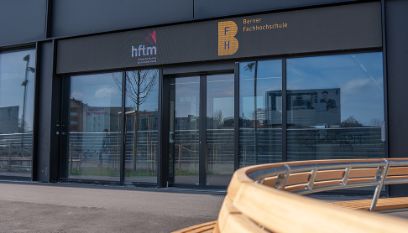
Please check the pages for the respective degree programs (CAS, SAS) to find out how and where your continuing education will take place. We are located at Aarbergstrasse 46 in the Switzerland Innovation Park Biel/Bienne.

Switzerland Innovation Park Biel/Bienne (SIPBB)

A location with many advantages

  • Classrooms within two minutes walking distance from Biel/Bienne railway station
  • Ideal train connections from Bern’s main railway station (every 15 minutes) and from Bern Wankdorf (every 30 minutes)
  • State-of-the-art infrastructure in the new SIPBB building
  • Various catering options in the immediate vicinity
  • Innovation and networking events

And that’s not all! Biel/Bienne is…

  • an innovation hotspot,
  • a university city,
  • an industrial and service city with numerous major players in the watchmaking, mechanical engineering, precision engineering and medical technology industries and major representatives of the communications and telecommunications sectors,
  • bordered by Lake Biel and its wide range of sports and leisure facilities,
  • a city that embodies bilingualism,
  • a town with a vibrant cultural life.

Biel Aarbergstrasse 46 (Switzerland Innovation Park Biel/Bienne)

Biel, Aarbergstrasse 46

Bern University of Applied Sciences

Engineering and Computer Science
Switzerland Innovation Park Biel/Bienne
Aarbergstrasse 46
CH 2503 Biel

Bern University of Applied Sciences

Engineering and Computer Science
Switzerland Innovation Park Biel/Bienne
Aarbergstrasse 46
CH 2503 Biel