

Headache Management Training
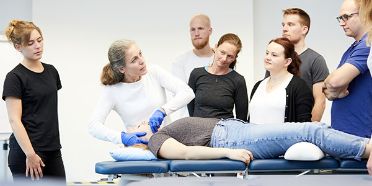
Headache management training improves diagnosis, treatment and collaboration. Patients receive better support, care pathways become clearer, inappropriate treatment is reduced, and care as a whole becomes more efficient and sustainable.
Factsheet
-
Schools involved
School of Health Professions
Business School -
Institute(s)
Institute for New Work
Nursing
Physiotherapy - Research unit(s) Pain, Stress, and Thermoregulation
- Funding organisation Others
- Duration (planned) 01.05.2026 - 30.04.2028
- Head of project Heike Kubat
-
Project staff
Dr. Kay Hanusch
Manuela Grieser
Dr. Claudia Poggiolini
Kevin Benjamin Dietrich
Prof. Dr. Verena Stahl
Prof. Dr. med. Christoph Schankin
Prof. Dr. Kerstin Lüdtke
Vivian Catharina Hilker
Prof. Dr. Heiner Baur -
Partner
Bellevue Medical Group AG, Zentrum für Kopfschmerzen und Migräne, Zürich
Universitätsklinik für Neurologie, Inselspital Bern
Kopftherapeuten e.V. Sulzbach D - Keywords Headache management; Migraine; Diagnostic accuracy; Evidence-based therapy; Physiotherapy; Interdisciplinary collaboration; Quality of care; Self-management; Health literacy
Situation
Migraine and other primary headache disorders are among the leading causes of disability in the working-age population. Despite the availability of effective acute and preventive therapies, substantial gaps in care persist. Migraine is frequently misclassified as tension-type headache or cervicogenic headache, high-frequency and chronic forms often remain under-recognized, preventive therapies are insufficiently implemented, and medication-overuse headache continues to represent a significant challenge. In addition, referrals to specialists are frequently delayed.
Course of action
Physiotherapists are often the first point of contact for individuals presenting with recurrent headaches and associated neck pain. However, in Switzerland no validated migraine-specific training program currently exists for this professional group, and the topic is only marginally represented in BSc and MSc physiotherapy curricula. To address this gap, we developed a two-day evidence-based training program. Core components include the ICHD-3 diagnostic criteria; differentiation between migraine, tension-type headache, and cervicogenic headache; recognition of chronic migraine and indications for preventive therapy; identification of “red flags”; structured referral criteria; and evidence-based physiotherapeutic assessment within an interdisciplinary care framework. The program is currently being evaluated in a randomized controlled trial in Switzerland.
Result
We anticipate that physiotherapists will substantially improve their diagnostic confidence and accuracy in distinguishing headache types. This is expected to reduce mismanagement and enable earlier access to appropriate, targeted pharmacological treatment. Furthermore, the training is designed to strengthen interdisciplinary collaboration, resulting in coordinated, efficient, and high-quality care processes.
Looking ahead
Strategically, the project addresses a critical interface between first-contact healthcare providers and specialized migraine care. Its objectives include reducing diagnostic delays, facilitating earlier initiation of guideline-based therapy, mitigating medication overuse, and generating real-world data on migraine care in Switzerland. The Headache Management Training is not limited to the education of a single professional group—as exemplified by physiotherapists in this initial study—but follows a broader, system-oriented approach. Its overarching aim is to improve the care of individuals with headache disorders and migraine in a comprehensive manner. Central to this approach is an interprofessional care model that integrates multiple health professions, strengthens competencies in headache management, and promotes structured treatment and referral pathways. The program also includes patient education to enhance self-management, disease understanding, and therapy adherence. In the long term, the concept aims to increase societal awareness of headache disorders, reduce stigma, and support early and appropriate treatment.