
International Agriculture and Rural Development

We address production-related, ecological, socio-economic and socio-political issues in agriculture, and its associated sectors, in low- and middle-income countries and emerging economies.

Our mandates and projects cover both research and services. Our goal is to develop holistic and sustainable solutions for current problems and challenges in agriculture and related sectors.

We apply a systemic approach in our applied research and project mandates. We pay particular attention to promoting inter- and transdisciplinarity, as well as participatory approaches. We also promote access to research for young people in projects through bachelor’s and master’s theses or research internships.

Services

We manage and support research and development projects and service mandates for private businesses, state institutions, development agencies and civil society. We focus primarily on the application, implementation and dissemination of solutions to current problems and challenges – solutions that are client-oriented and needs-driven.

We tap into the expertise of our interdisciplinary team of experts, which includes people with technical expertise in crop production, livestock production, farming, natural resources, agroforestry, forest science and food science as well as social scientists and education scientists with national and international experience in some 100 countries.

Wherever possible we work with local partner institutions in the South and East, calling on additional know-how from Swiss and international organisations as necessary. Both in research and in the provision of services we take part (usually with partners) in calls for tender.

Our principal services comprise:

  • Strategy development, project and programme planning
  • Project and programme support, evaluation and redesign
  • Technical and methodological support and backstopping
  • Coaching and facilitation
  • Application of participatory methods
  • Cost-benefit analysis of projects and programmes
  • Active involvement in national and international networks

Research and development projects may involve several of the areas of expertise listed below; the aim is always to find holistic and sustainable solutions to current challenges.

The International Agriculture Group works closely with other BFH-HAFL research areas in the three divisions – Agriculture, Forest Sciences and Food Sciences – under the umbrella of the HAFL Hugo P. Cecchini Institute for International Cooperation and Development.
Expertise

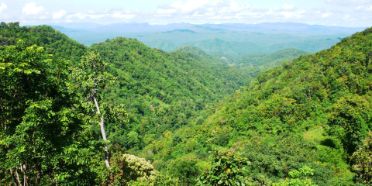
These projects and mandates focus on sustainable agricultural production in developing and newly industrialising countries in the face of climate change, resource scarcity and demographic and social change. We work closely with the farmers involved.

  • Analysis and optimisation of production systems (crop and livestock production) – for example in the areas of seed systems, crop protection, agroforestry, organic agriculture, pastoral farming, milk and meat production, reduction of post-harvest losses
  • Sustainable and efficient use of natural resources – water and irrigation, soil fertility, biodiversity, ecosystems at landscape level
  • Increasing the resilience of smallholders

We explore ways of improving market access for disadvantaged groups and developing value chains in the context of international agricultural trade and agricultural policy.

  • Market analysis
  • Value chain analysis
  • Quality management, certification and labels
  • Analysis of institutions and relevant policy areas
  • M4P/MSD analysis and implementation

In this area we focus on change in rural societies. For example, we work on livelihood strategies, poverty reduction and stakeholder analyses.

  • Qualitative and qualitative research, interviews, surveys, statistical analysis
  • Participatory methods
  • Interdisciplinary and transdisciplinary approaches

Our know-how in education, consultancy and knowledge management feeds into a wide range of projects, from curriculum development to website maintenance.

  • Evaluation, development and implementation of curricula, training programmes and teaching materials
  • Training of trainers in teaching and consulting methods
  • Backstopping of education projects
  • Evaluation of selected issues in education and consultancy
  • Planning and realisation of study trips with a focus on vocational training issues
  • Facilitation
  • Management of thematic networks
  • Information transfer and web publishing

We develop, plan and evaluate partners’ projects, measure their impact and analyse their effectiveness and efficiency.

  • Project identification and feasibility studies
  • Facilitation of planning workshops
  • Coaching of project staff
  • Scientific support during project implementation
  • Development of smart monitoring concepts
  • Project follow-up and analysis of lessons learned

Network

We have a broad international network. In our mandates and projects we work with stakeholders in the following areas:

  • Non-profit organisations (NPOs): HELVETAS Swiss Intercooperation, Swisscontact, Agridea, Syngenta Foundation, HEKS, etc.
  • Private sector: Coop, Nestlé, Chocolats Halba, etc.
  • Global organisations: FAO, IFAD, IPCC, UNEP, etc.
  • National and international research institutions: CGIAR research centres, Agroscope, CABI, FiBL, Eawag, etc.
  • National and international networks: SFIAR, YPARD, Agrinatura, Swiss Water Partnership, GASL, etc.
  • Swiss federal agencies: SDC, SECO, BLW, BAFU, SBFI, etc.
  • Universities: Bern University, Zurich University, ETHZ, EPFL, ZHAW, etc.
  • Bilateral organisations such as GIZ etc.
  • Foundations, e.g. Simon Patiño Foundation.

Projects

Our portfolio encompasses research and service provision projects and short-term consultancy mandates in various countries. In keeping with our preference for a holistic approach, many projects encompass a number of thematic areas. Some examples.

Team and contact information

Our portfolio encompasses research and service provision projects and short-term consultancy mandates in various countries. In keeping with our preference for a holistic approach, many projects encompass a number of thematic areas. Some examples.