Information events
Do you have questions about the Alpenmaster? Take part in one of the information events.



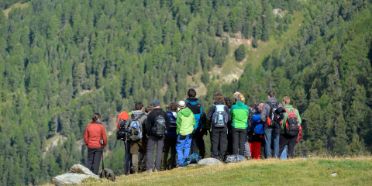
This is the ‘Alpine Master’s’, the BFH-HAFL master's degree programme for professionals in regional development and mountain regions.
The MSc in Life Sciences – Regional Management in Mountain Areas is unique. All content is specifically geared towards mountain regions and is deepened using examples from the Alps.
You can complete our Alpine Master’s either full-time or part-time.
BFH-HAFL’s Alpine Master's will make you a specialist for mountain regions.
Do you have questions about the Alpenmaster? Take part in one of the information events.
Keine Veranstaltungen gefunden.

The regional management of mountain areas requires specialists who are familiar with these features and trends and can adopt an interdisciplinary and cross-sectoral approach to their work, focusing on practicality and goals. The MSc in Life Sciences with the Regional Management in Mountain Areas (Alpine master’s) major equips you for precisely this task.
The Alpine master’s programme will equip you with sound professional knowledge of regional management in mountain areas – you will become an expert in your field.
You will develop the ability to delve quickly and independently into unfamiliar areas, then implement your new knowledge in practice.
You will master a broad spectrum of methodological and leadership skills and learn to manage complex projects competently.
You will become adept at making scientific contributions in multidisciplinary teams.
During this major, you will combine your knowledge of ecological and socio-economic issues with the management of regional development in mountain areas. You will therefore be studying how nature, land use, society and politics interact. In particular, you will examine:
The content relates specifically to mountain areas and is illustrated by examples from the Alps.
Upon completing this programme, you will have acquired the skills that employers demand for management positions: practical specialists for mountain regions who can work scientifically and manage complex, multidisciplinary projects competently.
Upon successful completion of the programme you will be awarded the title “Master of Science in Life Sciences with Specialisation in Regional Management in Mountain Areas” from Bern University of Applied Sciences.
With the Alpmaster’s you will be well prepared to take on challenging leadership roles in
You will be qualified for posts in the fields of regional development, nature parks and protected areas or in related sectors including agriculture and forestry.

The Regional Management in Mountain Areas programme is modular and allows you to choose those modules which correspond to your interests and which are compatible with your professional activity and/or family obligations. The high proportion of self-study also contributes to this flexibility.
The full-time programme lasts 3-5 semesters. If you study part-time, you should ideally complete your studies after 4-8 semesters. You will study part-time together with the regular students, but take fewer modules per semester. As the timetable changes each quarter, your employer and/or family will need to be flexible.
Some cooperation modules are offered as one-week compact courses. The others take place over seven weeks on Thursdays or Fridays. The advanced modules usually last five weeks in a row - from Monday to Wednesday. In the fall and spring semesters, one block week each takes place in mountain regions.
You will take interdisciplinary foundation modules such as Business Administration and Data Management. These core-competence modules are offered to all students on all MSc in Life Sciences programmes. On the other hand, you will take modules that teach important skills relating to mountain regions. From a range of major-specific modules, you choose those modules that will best help you to hone your specialist knowledge and develop your interests in current and exciting subject areas.
At the heart of your studies is your master’s thesis. This is generally embedded within a BFH-HAFL project, but may also be conducted with an external institution or company – for example, your employer.
| Master’s thesis – the core of your studies | 30 credits | |
| Specialisation modules | min. 30 credits | |
| Cluster-specific modules (Environment Cluster) | min. 9 credits | |
| Core-competence modules (Data and Business Management) | min. 12 credits |
| Code | Module title | ECTS | Module type | |||
| Major-specific modules – compulsory | ||||||
|---|---|---|---|---|---|---|
| AF-51 | Agricultural and Forest Production in Mountain Areas → Module video | 5 | compulsory | |||
| AF-52 | Natural Hazards and Risk Management → Module video | 5 | compulsory | |||
| AF-54 | Climate Change and Land Systems | 5 | compulsory | |||
| AF-55 | Regional Management, Tourism and Parks | 5 | compulsory | |||
| AF-56 | Landscape development and planning → Module video | 5 | compulsory | |||
| AF-57 | Interdisciplinary Perspectives on Current Topics in Mountain Areas | |||||
| Minimum required | 30 | |||||
| Further specialization modules – optional | ||||||
| AF-03 | Integrated Natural Resources Management | 5 | optional | |||
| AF-24 | Advances in Agricultural and Forest Sciences | 5 | optional | |||
| AF-32 | Policies and Institutions as Drivers for Development and Innovation | 5 | optional | |||
| AF-53 | Analysis of Spatial Data – GIS → Module video | 5 | optional | |||
| Cluster-specific modules – compulsory elective | ||||||
| E1 | Journal Club Environmental and Natural Resource Sciences | 3 | optional | |||
| E2 | Life Cycle Assessment | 3 | optional | |||
| E3 | 3 | optional | ||||
| E4 | 3 | optional | ||||
| E5 | 3 | optional | ||||
| E6 | 3 | optional | ||||
| Minimum required | 9 | |||||
| Core competence modules – compulsory elective | ||||||
| B1 | 3 | optional | ||||
| B2 | 3 | optional | ||||
| B3 | 3 | optional | ||||
| B4 | 3 | optional | ||||
| D1* | 3 | optional | ||||
| D2* | 3 | optional | ||||
| D3* | 3 | optional | ||||
| D4 | Data and Ethics | 3 | optional | |||
| Minimum required * One of the modules D1, D2 or D3 must be successfully passed |
12 | |||||
| All areas | Minimum required (has to be completed by taking optional modules) | 60 | ||||
| Thesis | Required from master’s thesis | 30 | ||||
| Total | Minimum required | 90 |
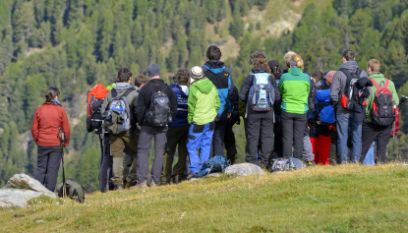
To take our Alpine master’s course, you must hold a bachelor’s degree in agriculture or forest science or a related field and have a good knowledge of English and German.
You will be accepted to the programme if you hold a bachelor’s degree from a Swiss university of applied sciences in one of the following fields of study and graduated with a grade of at least 5:
Do you have a degree in a different discipline? Was your final grade lower than a 5? Did you earn your degree in a different country? If so, you must pass an aptitude assessment.
Do you have a bachelor’s degree from an academic university? If so, you must provide evidence of at least half a year of work experience in an area we have approved.
The teaching languages in this major are English and German. Therefore, it’s recommended that you have at least B2-level language skills, as per the European Language Portfolio. You may write your master’s thesis in English, German or French.
You can spend an exchange semester at one of our partner universities during your master's programme. Inform us at an early stage if you are planning a study exchange. We are happy to advise and support you.
Would you like to spend an exchange semester or year at BFH-HAFL in Switzerland? If your home university is on our list of partner universities, please contact your International Office. If not, they should contact us.
We review each international application individually. Please send questions to msc-fs.hafl@bfh.ch before submitting your official application.
At BFH, different fees apply for programmes and examinations.
| Application fee (per application)* | CHF 100 |
| Tuition fees (per semester) | CHF 850 |
| Tuition fees for international students (per semester) | CHF 2,550 (or CHF 1,050 or CHF 850)** |
| Examination fee (per semester) | CHF 80 |
| Fee for social, cultural and sport offerings (per semester) | CHF 24 |
| Membership fee for the Bern University of Applied Sciences Student Association (VSBFH) (per semester) | CHF 15 |
|
Subject to change without notice.
* plus CHF 10 processing fee if paying by paying-in slip/paper invoice. A new application fee of CHF 150 will be implemented for registrations for the spring semester 2027. |
Financial aid is available through grants and loans. Grants are one-off or ongoing payments that don’t usually have to be paid back provided you complete your course. Loans are one-off or ongoing payments that must be paid back after you finish your course.
Grants and loans for Swiss students and overseas students are generally paid out by the canton where the students’ parents are tax residents.
Students who have been tax residents in the Canton of Bern for at least two years are able to apply for cantonal grants and loans. Applications should be submitted to the Financial Aid Office at the Department of Education.
Further information (incl. financial aid calculator):
The websites educaswiss.ch, stipendium.ch and European Funding Guide cover all the key information about grants in Switzerland and overseas.
There are also numerous private foundations and funds that offer financial support to students. The electronic foundation directory administered by the Federal Department of Home Affairs offers a comprehensive summary of these organisations and can be searched by keywords (e.g. student, research, financial aid, etc.). Other sources of funding include the foundation directories for individual cantons and private foundations.
The following foundations offer funding specifically to BFH students and students from other universities:
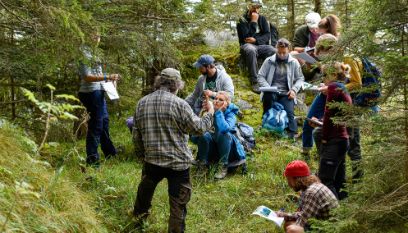
Make sure you secure your place in the Regional Management in Mountain Areas programme early. You can submit any missing documents at a later date.
Prepare the following documents as PDF or JPG:
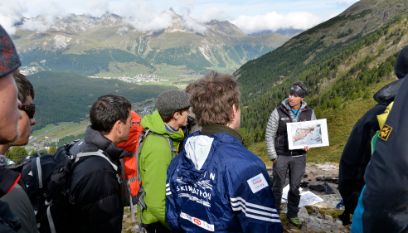
Choosing a training or further education program is an important decision when planning your professional career. We will be happy to answer your questions during an individual consultation and clarify your personal requirements for the Regional Management in Mountain Areas programme at BFH-HAFL.
At our information events, you will find out everything you need to know about the degree programme, admission requirements and your career prospects.
Keine Veranstaltungen gefunden.
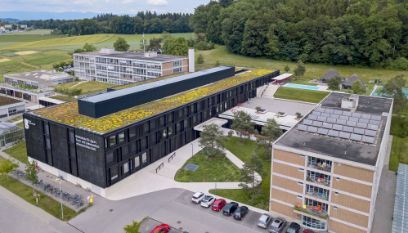
The BFH-HAFL campus is located in Zollikofen, near Bern. Nestled among fields and forests, the location offers both the modern infrastructure you need for your studies and countless recreational options.
The BFH-HAFL campus in Zollikofen offers modern lecture halls, laboratories and experimental fields.
But the campus is not just a place to study. With a swimming pool, barbecue areas, a sauna and much more, it also offers a wide range of leisure activities. There is also a student residence with around 140 furnished rooms and a canteen on the campus.